Blog·
Field notes: the DC that sat dark for a year, then filled the lot in a week
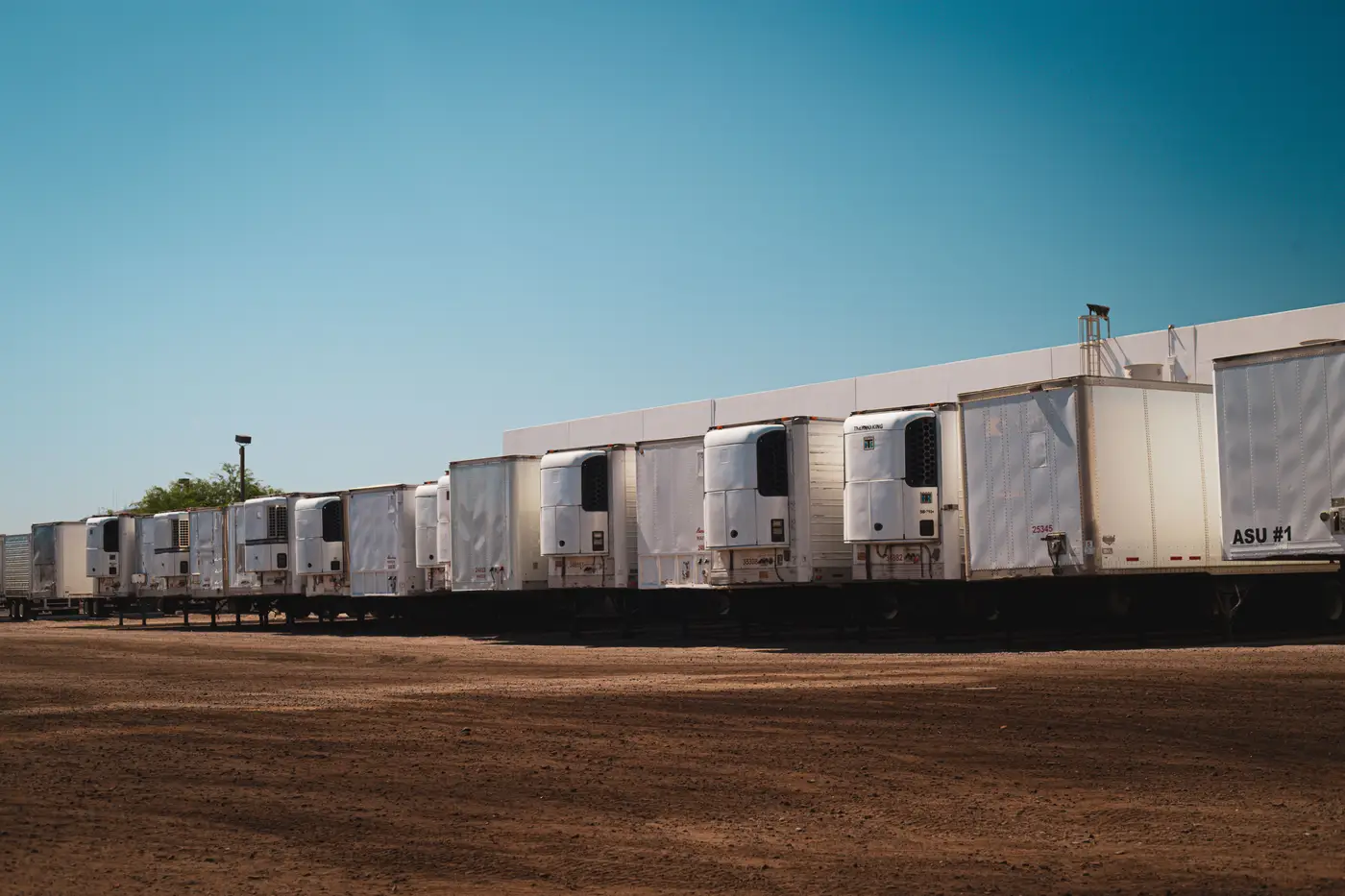
There's a building type every national accounts manager learns to recognize from the highway: tilt-up concrete, forty-some dock doors, a lot big enough to stage a thousand trailers, and nobody home. You drive past it on the way to a real customer and think, somebody spent thirty million dollars on that and it's just sitting there.
I tracked one of these for about fourteen months. Finished shell, graded lot, sodded retention pond, the whole package, and completely still. No cars by the man-door, no security trailer, nothing. The leasing sign out front changed phone numbers twice. I'd check it every time I drove the route, mostly out of habit, the way you keep glancing at a house for sale in your own neighborhood.
Then one week it wasn't still anymore. A string of flatbeds showed up hauling racking. A dumpster appeared, then three more. Portable toilets lined up along the fence like they'd been dropped from a plane. By the following Monday there were pickup trucks parked in rows where there'd been nothing but painted stripes, and a week after that the first tractor-trailers were backed into the dock doors.
That's the part people outside this trade don't get. They assume a facility ramps up the way it was built, slow and visible, cranes for months, then an opening. It doesn't work that way on the tenant side. The building sits dark because the lease isn't signed, or the signed lease has a financing contingency, or the tenant's own board hasn't blessed the capital number yet. None of that shows up from the road. What shows up from the road is a parking lot full of pickups in the space of five business days, because once the ink is dry, the tenant's general contractor and their racking vendor and their security firm all mobilize on the same calendar, and they don't wait around.
If you sell into that building, pest control, janitorial, dock equipment, uniforms, waste hauling, whatever your line is, the contract conversation happens somewhere in that same window. Sometimes it's locked in before the first truck arrives, because procurement moves ahead of ops. Sometimes it's still open the week the forklifts show up, because the facility manager just got hired and is building his vendor list from scratch. Either way, the people who get a call into that building are the ones who knew it had gone from dark to active before the trade publications wrote it up or a competitor's windshield sticker showed up on the gate.
Nobody on an accounts team can drive past every dark building in their territory once a week. You've got a hundred of these shells scattered across a region, most of them staying dark for another year, one or two of them about to flip. Windshield time doesn't scale, and a permit filing tells you a lease might exist, not that anyone's moving in this month.
That's the gap a weekly satellite pass over a sitting-empty site closes. It doesn't know who signed the lease or what the contract terms are, but it can flag the week the lot stops being empty, which is usually close enough to the decision window to matter. If you want to see how that tracking actually gets set up for a territory, the breakdown is on the Go-Live Detection homepage.
Check the dark ones again next quarter. One of them is always closer to filling than it looks from the road.